
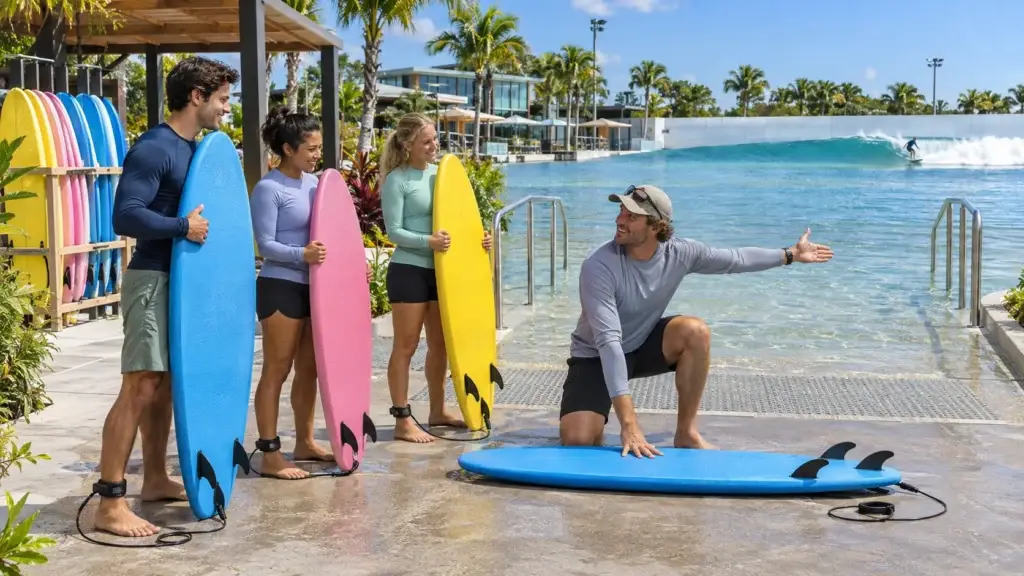
Your first wave pool session goes much better when you arrive prepared and know how the session works before your first wave comes through. In the ocean, you can watch a few sets and ease into position. A surf pool runs on a structured rhythm.
That’s why the most useful wave pool surfing tips have nothing to do with new maneuvers. Arrive early, know where to sit, follow the queue, be ready when your turn comes, and don’t waste energy paddling where you don’t need to.
At The Point Surf Park in Fellsmere, Florida, we match every session to ability level and deliver waves in a controlled setting. Once you understand the system, you spend less time figuring out what’s happening and more time surfing.
How Is a Wave Pool Session Different From the Ocean?
The biggest difference is predictability. In a wave pool, waves arrive in a controlled pattern, and surfers follow a set system for taking turns.
In the ocean, you’re constantly reading swell direction, shifting peaks, wind, currents, tides, and other surfers. You can paddle to one spot and watch the best wave break 30 yards away. There are plenty of other differences between surf park and ocean surfing, but for your first session the key one is this: another wave is always coming, so being ready matters more than chasing the peak.
A controlled wave doesn’t mean you can switch off. Watch the surfers ahead of you: where they sit, when they start paddling, where clean takeoffs happen, and what makes people miss waves. A few minutes of watching makes the rest of your session far more productive.
What Should You Bring?
Bring the basics for any surf day: swimsuit, towel, sunscreen, a change of clothes, a water bottle, and any medication you need. Depending on your booking, you may also need a valid photo ID. Check your booking confirmation before you leave home.
Sun Protection for a Florida Session
Don’t treat sunscreen as something you put on once in the parking lot. The Skin Cancer Foundation recommends a water-resistant, broad-spectrum sunscreen with SPF 50 or higher for extended time outdoors, reapplied every two hours and right after swimming or heavy sweating.
Surfing means direct sun, water, sweat and glare off the surface. Apply sunscreen before check-in so you’re not rushing, and bring enough to reapply if you’re staying after your session. A hat, sunglasses and shade help when you’re out of the water.
Your Own Gear or Ours
You can bring your own board, but personal surfboards and bodyboards need staff inspection and approval first. Board size, shape, condition, fin setup, your session type and your skill level all affect whether it’s suitable. Beginner sessions allow soft-top surfboards only, so don’t assume your usual ocean board will be approved.
If you’d rather travel light, we rent surfboards, wetsuits, helmets and other surf gear, depending on inventory and your session. Reserve ahead, since same-day availability isn’t guaranteed, and leave time for pickup and sizing. The fewer decisions you leave until the last minute, the calmer you’ll feel when the session starts.
When Should You Arrive?
Arrive early enough to check in, sign waivers, pick up gear, change, and attend the safety briefing. Your booking confirmation lists the recommended arrival time, so go by that rather than a general guess.
Everyone who enters our facility needs a signed waiver, spectators included. If a surfer is under 18, a parent or legal guardian must complete the waivers and be at check-in.
We’re also strict about late arrivals. If you arrive more than 30 minutes after your session starts, it counts as a no-show. Within that 30-minute window, you may still surf when time, space, and safety allow, but the missed time isn’t added back.
Waivers, Check-In and the Safety Briefing
Treat the briefing as part of your surf time, not paperwork to rush through. It covers where to enter and exit, how the queue works, what to do after a fall, where to wait, and any rules for your session.
If anything about positioning or the queue isn’t clear, ask before you get in the water. Being five minutes early and informed beats learning the system while everyone else is already surfing.
How Does the Wave Queue Work?
Our standard system is one surfer per wave, with priority. You wait your turn, ride your wave, clear the riding area, and rejoin the queue.
It sounds simple, but knowing the rhythm makes a big difference. Watch the surfers in front of you: how long it takes from one ride to the next, and where the next surfer moves as their turn gets close. You don’t want to realize it’s your wave after the takeoff point has already passed.
One Surfer Per Wave and Wave Priority
Never paddle for another surfer’s wave or sit where you’ll get in the way of their ride. Wait for your turn. That’s both etiquette and safety.
In a controlled queue, everyone should know whose wave is next. Jumping the order doesn’t get you more surfing; it creates confusion and can put someone in the riding line. Stay alert as your turn gets closer, so you’re ready without crowding anyone.
What If You Miss Your Wave or Fall?
If you miss your wave, end up out of position, or fall, go back to the queue and wait for your next turn. Don’t stay in the riding zone trying to win back the lost wave.
After a fall, clear the active surf area as quickly and safely as you can, and follow staff directions on channels, exits, and where to reposition. Missing a wave is frustrating, but rushing to make up for it usually leads to another mistake. Reset and make the next one count.
Where Should You Sit and When Should You Paddle?
Start from the position shown in the briefing, then watch the surfers making clean takeoffs. Because the wave arrives in the same place each time, small positioning errors show up fast. Sit too far inside, and the wave reaches you before you have speed. Sit too far outside, and you may never get into it.
Watch where successful surfers at your level start, then copy their paddle timing. Don’t start paddling just because you see movement in the water; learn the cue that tells you your wave is actually reaching the takeoff point.
Once you find the right spot, go back to it every time. That’s one of the big advantages of a surf pool: you can make one positioning change and test it on a near-identical wave.
How Do You Get More Waves in a Session?
You don’t get more usable waves by rushing the queue. You get them by cutting out preventable misses:
- Be in position before your turn.
- Know which direction you’re going.
- Sort out your leash and board before you reach the front.
- Watch the surfers ahead of you instead of chatting until the last second.
- Book a session that genuinely matches your ability.
That last one matters most. If the wave is too advanced, you’ll spend more of the session missing takeoffs or falling early than riding. And if you’re new to surf parks but already surf, give yourself a couple of waves to learn the timing before you go for your biggest move. The goal isn’t more starts; it’s turning more of your turns into real rides.
How Do You Pace Your Energy?
Don’t surf your first few waves as if each one is your last. With less paddling and waiting than the ocean, a wave pool can feel easy, but repeated takeoffs and rides add up.
Drink plenty of water before your session, and use your time in the queue to slow your breathing and reset. If you’re working on a technique, don’t try to overpower every section; good timing usually takes less energy than forcing the board.
Fatigue also hurts positioning. Tired surfers paddle later, stand taller, react slower, and lose control after a fall. A strong final third of your session beats burning out in the first ten minutes.
Wave Pool Etiquette: Dos and Don’ts
Good etiquette keeps the session moving and makes it better for everyone.
Do:
- Listen to staff and stay inside the session area.
- Wait your turn, and be ready when it comes.
- Clear the riding line quickly after a fall.
- Book the level that matches your ability.
Don’t:
- Interfere with another surfer’s wave or skip ahead in the queue.
- Bring unsafe or unapproved equipment into the water.
- Surf under the influence of alcohol or drugs.
- Bring glass near the lagoon, since glass containers are banned there.
Most of it comes down to one idea: be predictable, pay attention, and respect the people sharing your session.
Frequently Asked Questions
Do I Need to Sign a Waiver?
Yes. Everyone who enters our park needs a signed waiver, spectators included. Surfers under 18 need a parent or legal guardian to sign, and that adult must also be at check-in.
Can My Family Watch?
Yes. Spectators can watch with a $10 Beach Pass, and kids 10 and under get in free. Parents, guardians and siblings with a minor who’s surfing don’t need a Beach Pass, but everyone still needs a signed waiver.
Can I Bring My Own Board?
Yes, after staff inspection and approval. The board has to suit your session, your ability, its condition, dimensions, and fin setup. Beginner sessions allow soft-top surfboards only.
What Happens If I’m Late?
Arrive more than 30 minutes after your session starts, and it counts as a no-show, so you lose the booking value. Within the 30-minute grace period, you may still surf if time, space, and safety allow, but missed time isn’t added back.
Final Thoughts
The best wave pool surfing tips are about using the pool’s predictability to your advantage. Arrive early, watch the queue, learn the takeoff spot, and be ready when your turn comes. Clear the riding area fast after a fall, bring the right gear, protect yourself from the Florida sun, and pace your energy.
You don’t need to understand everything before your first wave. You just need enough preparation to spend your session learning the wave, not sorting out avoidable logistics.
If you’ve never surfed and want a coached start instead of a standard session, it helps to know what happens during your first surf lesson before you book.
Curious what a session here is really like? See what other surfers say about us on Google.
Plan Your First Session at The Point
Your first visit should feel exciting, not rushed. Confirm your booking details, leave plenty of time for check-in, and get your gear sorted before you leave home.
Arrival details, equipment info and spectator access are all there when you plan your visit. Then show up ready to surf when your wave comes.